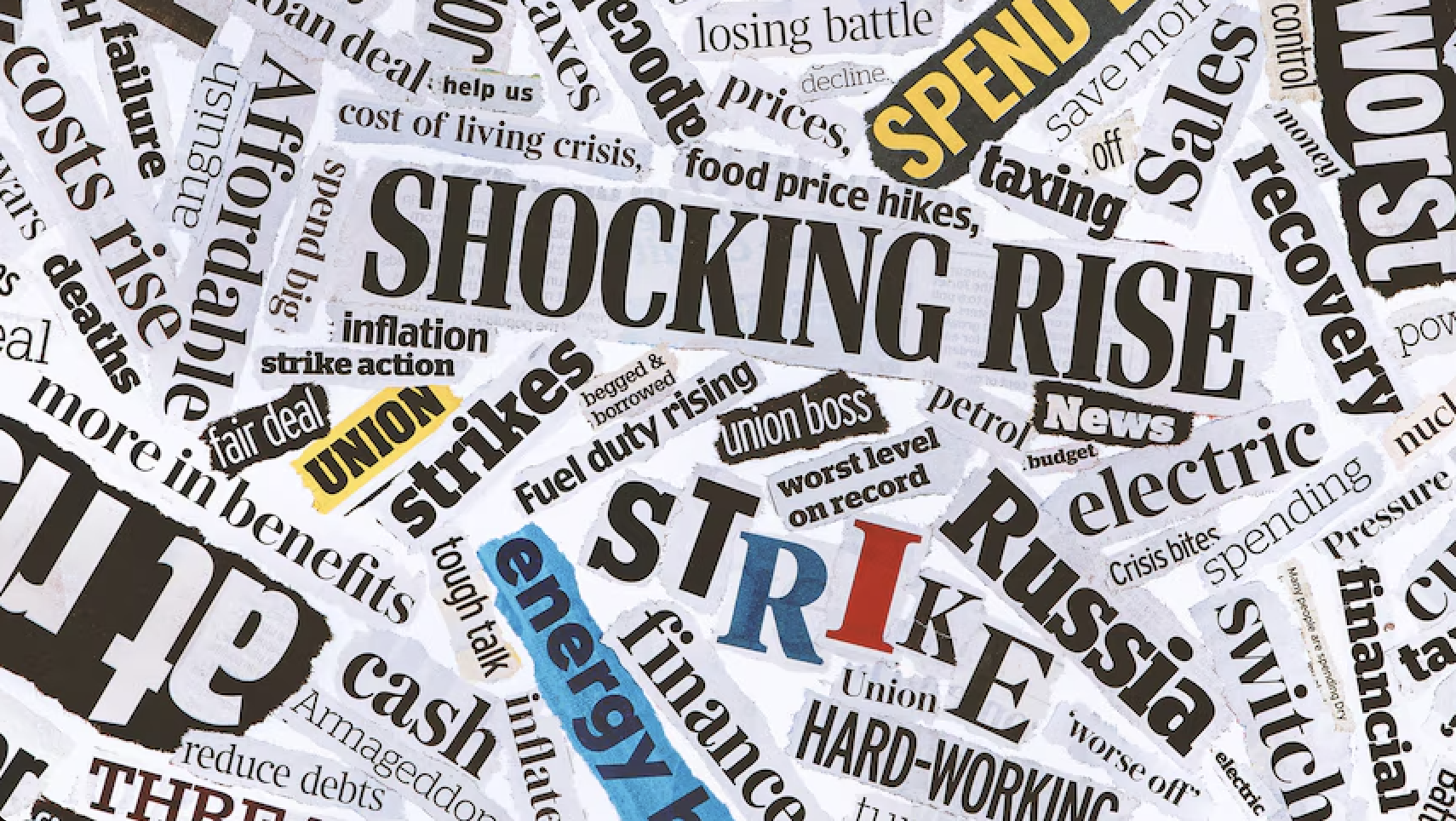
Fear and anger are two of the most powerful emotions.
Scare tactics rely on these primal instincts to be effective. Dishonesty, manipulation or the concept of loss can spark this response in an instant.
Clickbait headlines, ‘gotcha’ moments and political spin are shaped on these principles. Attention grabbing content that actively lacks context to capture and direct your time and energy.
The hard sell isn’t the headline, it’s in the fine print.
Sustaining an emotion needs persuasive storytelling to create connection. Historical references reinforce this isn’t an isolated issue and provide credibility, personal anecdotes make it relatable, and statistics and data reassures the pragmatic parts of our mind.
A compelling story doesn’t have to include the whole picture, you can retrofit the details to press a point. Handpicking a selection of these elements are strong stand alone pieces, the question is whether it holds up when pulled apart and placed in a wider context.
That’s when the intent becomes clear and distinguishes whether a narrative is designed to inform and educate or create chaos. Building out the facts and helping people connect the dots to highlight why something is alarming is different to designing a story based on fear.
Negative gearing is one that springs to mind and how in 2019 Labor lost an ‘unlosable’ election because of the policy reforms they proposed in the lead up to the election.
Seven years later the housing market is more volatile than before and the negative gearing conversation has been dragged back to the forefront ahead of the 2026 Federal budget next week.
This excerpt from a 2024 Australian National University opinion piece on the 2019 election, highlights that the problematic themes in political reporting remain:
He [Bill Shorten] went down in 2019 for being too expansive and honest about policy as much a reflection on voters and a corrosive media as it is on the former leader.
Policy frankness is all too rare in our politics and should be lauded. It does not serve the electorate’s interests for media to simply parrot the reductive rules of exchange which state that reforms should be modest (and remain hidden) despite the scale of problems needing attention.
Neither does it serve an active dynamic polity to vilify those who dare to mount arguments, take voters into their confidence and seek a more genuine electoral mandate.
In other words, Shorten lost in 2019 partly because he was too upfront about how big his plans were and the media and voters punished him for it. Politicians who are honest about the scale of problems and what it will take to fix them are rare and deserve some credit for it. The media did the Coalition’s job for them, dismissing bold policy as too ambitious or too risky and it doesn’t serve anyone. There is something deeply wrong with a political culture that treats honesty as a liability.
Disarming people doesn’t always mean deescalating a situation with benevolence, it can be used in reverse to push an agenda, often preying on underrepresented or vulnerable communities.
Polarising perspectives adds momentum, serving as entertainment drivers. They’re captivating through their divisive nature. Similar to someone who can dance, act and sing, if a person can capture how you’re feeling, create a convincing argument with a target and deliver it with theatrics, it’s a triple threat.
Establishing an enemy is more manageable than working through the issue. It’s easier to create action and a sense of urgency when it’s aimed at a direct pinpoint and based on scarcity, confusion, increased cost or lack of access. Fuelling an ‘us versus them’ mentality, which often pits people against each other rather than the problem.
Increased cost of living, stagnant wages, rising unemployment rates and intensified housing insecurity are everyday struggles and areas to weaponise because there is already immense pressure there.
If you’re doing all the right things and still can’t seem to get ahead, let alone sit at a comfortable baseline, then it makes sense to back in the loud, definitive voice advocating for your concerns
Clear and absolute cuts through, long winded and obscure doesn’t. Which is a flaw with both sides of the debate, on one hand you have an active attempt of using everyday battles as an instrument and the other lacks a willingness or capability to accurately step out the situation. Reducing an important issue to discourse of stoking fear and playing the blame game.
Again. It’s all in the intent.
Saying the right things doesn’t automatically mean acting in good faith. Someone’s claim to good faith could be rooted in a moral reference point that may be genuinely incompatible with yours.
The principles for good and bad, right and wrong seem black and white but there is always a conflicting position. To the majority it may be false, morally bankrupt, even abhorrent, but interpretation often stems from lived experience or personal motives, that in isolation is as good as true to some.
Deciphering whether there is a genuine call to action for change or a sound bite to sway opinions back to a wider agenda isn’t straightforward or simple.
Genuine positions are built up brick by brick, their integrity holds through consistency when you pull it apart and assess it, brick by brick. In the same way we analyse when a person’s words and actions don’t align, discrepancies will always surface.
If your role is to serve the public, then it should withstand intense scrutiny. Media and Government are two key drivers and for both areas there are codes and principles that govern this expectation.
The “Nolan Principles” outline seven principles for public life: selflessness, integrity, objectivity, accountability, openness, honesty and leadership.
Similarly in the world of media, the code of ethics centred on honesty, fairness, accuracy, independence and respect for the rights of others. A longstanding declaration, echoing the same sentiment from the Journalist’s Creed written in 1914.
“I believe that the public journal is a public trust; that all connected with it are, to the full measure of their responsibility, trustees for the public; that acceptance of a lesser service than the public service is betrayal of this trust.”
If acting with sincerity and integrity isn’t guaranteed, it shifts the responsibility on the consumer to dig a little deeper. Is that fair? No. Is it simple? Also, no. But as our political and media landscapes continue to evolve, we have to move with it.
Diversify your media consumption, read opposing views or arguments, switch up your sources to extend beyond media outlets and apply critical thinking skills across every bit of material.
Discernment isn’t a rejection of any and all commentary, it’s an active choice to form a decision based on your own accord, rather than accepting direction at face value.